
FEATURED PROJECT
Enterprise Workflow Automation Systems
Enterprise Workflow Orchestration & Automation Infrastructure
Enterprise automation systems designed to orchestrate operational workflows, automate validation processes, manage execution pipelines, and coordinate scalable business operations across connected enterprise environments.
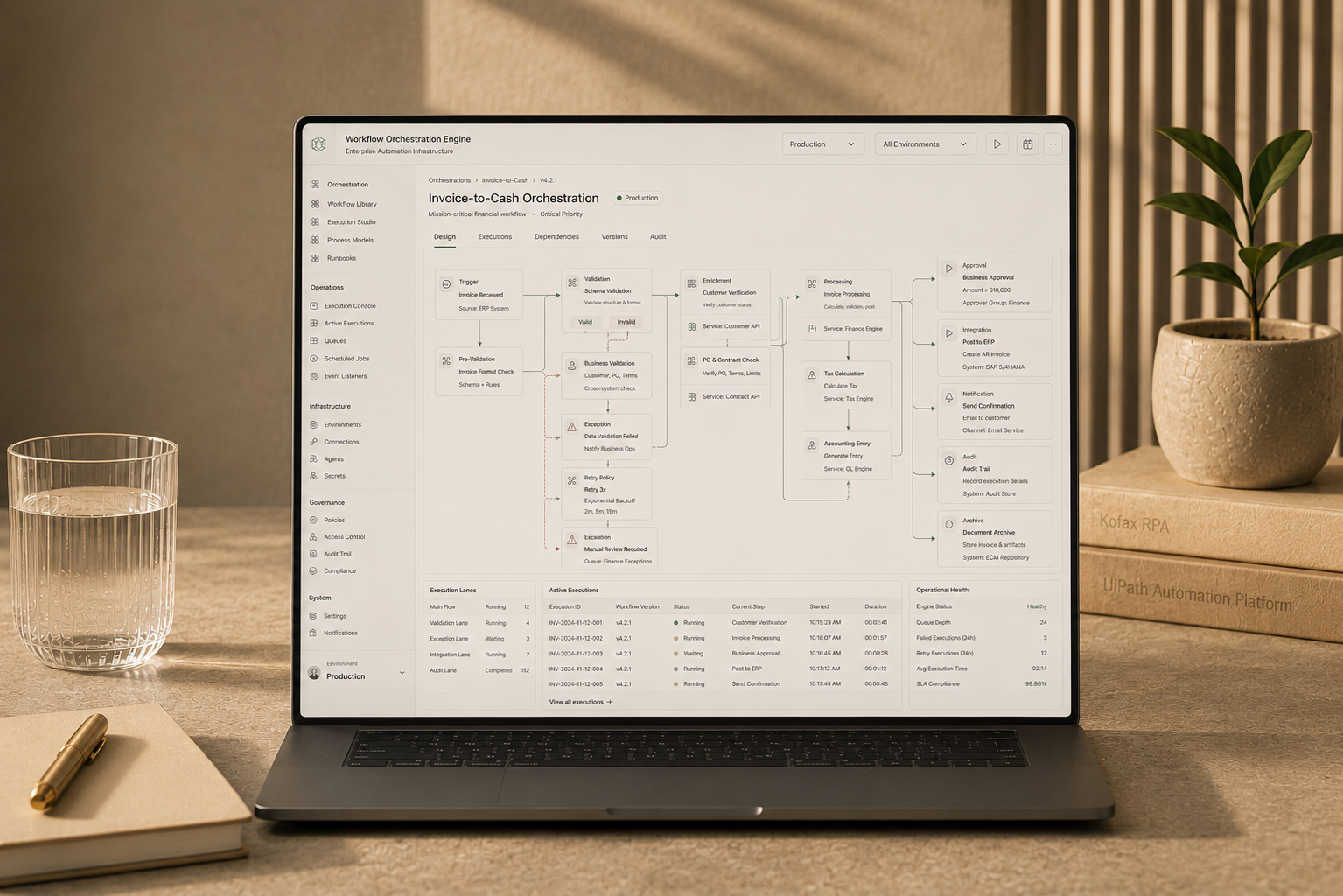
PROJECT OVERVIEW
The automation platform was designed to orchestrate enterprise workflows across multiple operational systems using Kofax RPA and UiPath. It centralized repetitive processes, workflow execution, exception handling, and operational monitoring into a maintainable automation ecosystem.
The solution focused on reducing manual operational overhead while improving consistency, execution visibility, and workflow reliability across business-critical processes.
Core functionality includes:
• workflow automation and orchestration
• multi-system process coordination
• scheduled automation execution
• queue and workload management
• exception handling and retry workflows
• operational monitoring and reporting
• role-based workflow visibility
• enterprise system integrations
Rather than isolated automation scripts, the platform introduced reusable orchestration workflows designed to scale operational processes safely and consistently across teams and systems.
SYSTEM ARCHITECTURE
A modular automation architecture designed for workflow orchestration, operational reliability, and scalable enterprise process coordination.
A connected automation infrastructure designed to coordinate enterprise workflows, operational execution, validation systems, and scalable process orchestration across distributed business operations.
The platform architecture combined orchestration pipelines, queue management, exception handling, validation routing, and operational monitoring into a unified automation environment focused on reliability, scalability, and execution visibility.
Connected automation services coordinated execution logic, system integrations, retries, validations, and operational states through reusable workflow infrastructure.
01
Business Trigger
A business event or scheduled execution initiates the automation workflow pipeline.
02
Workflow Orchestration
Automation workflows route operational tasks through structured execution stages and process queues.
03
System Processing
Integrated automation tasks interact with enterprise applications, APIs, and operational systems.
04
Operational Validation
Validation rules verify execution states, workflow integrity, and operational consistency.
05
Exception Handling
Workflow interruptions, failures, and operational inconsistencies are captured and routed for resolution.
06
Completion & Notification
Successful execution updates operational states, generates notifications, and finalizes workflow processing.
CORE SYSTEMS
The automation infrastructure was designed around reusable workflow components that improved scalability, operational consistency, and maintainable enterprise process coordination.
Modular orchestration systems connected operational logic, workflow execution, monitoring, retries, and exception handling into a unified automation environment.
Workflow Orchestration
Automated execution pipelines coordinating enterprise operational workflows, processing logic, and task sequencing.
Queue Management
Process queue systems monitoring workflow priorities, retries, pending executions, and operational states.
Multi-System Automation
Connected automation workflows integrating APIs, databases, enterprise applications, and operational systems.
Exception Handling
Automation safeguards designed to detect workflow failures, capture exceptions, and support recovery processes.
Scheduled Automation
Time-based execution systems automating recurring operational tasks and repetitive enterprise workflows.
Operational Monitoring
Monitoring infrastructure tracking execution states, workflow performance, retries, failures, and operational throughput.
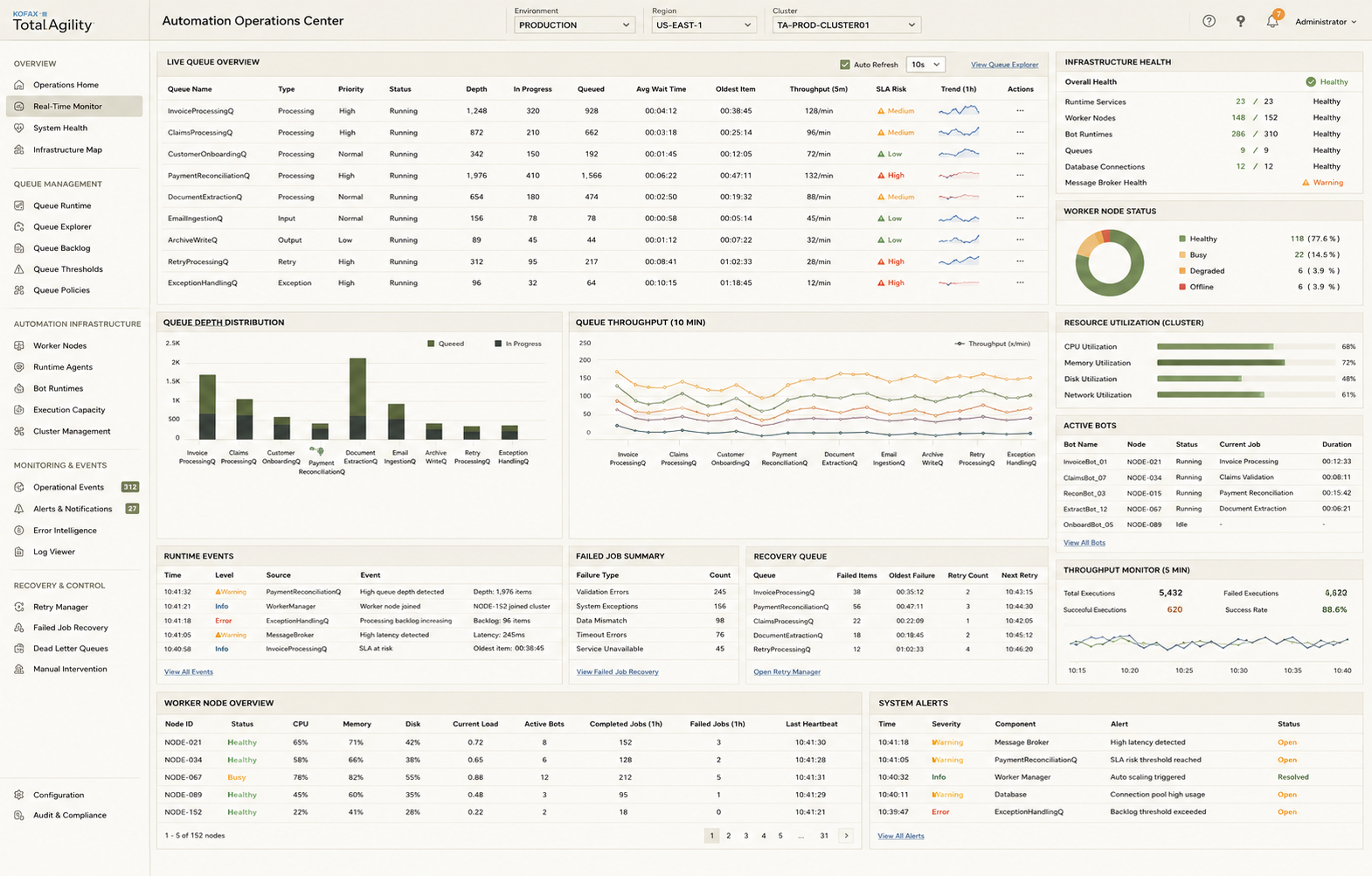
PLATFORM VIEWS
Key interfaces for orchestrating, monitoring, and managing enterprise automation workflows across connected operational systems.
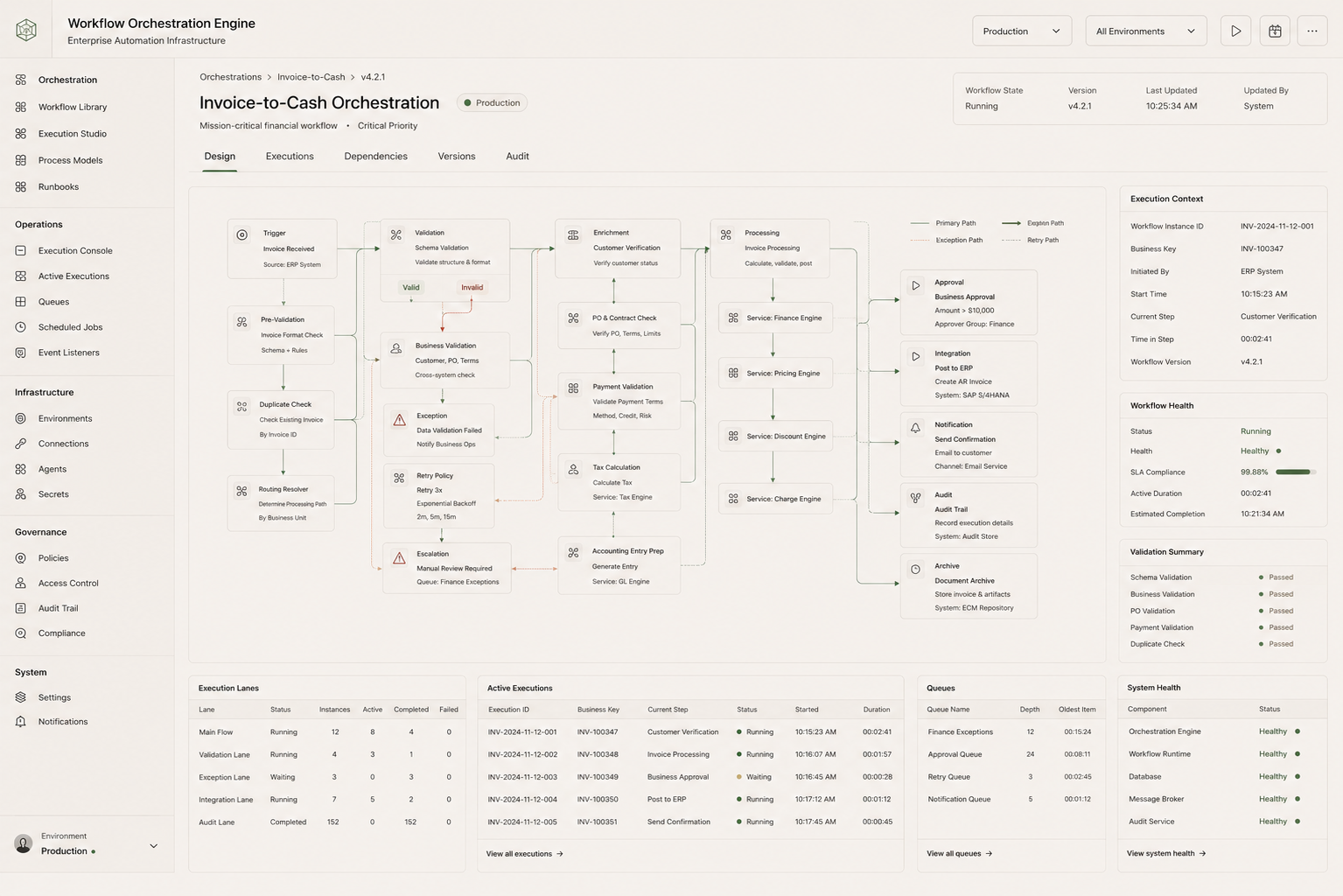
01 — Workflow Orchestration Engine
Visual workflow infrastructure used to coordinate automation sequences, execution paths, conditional logic, and operational routing.
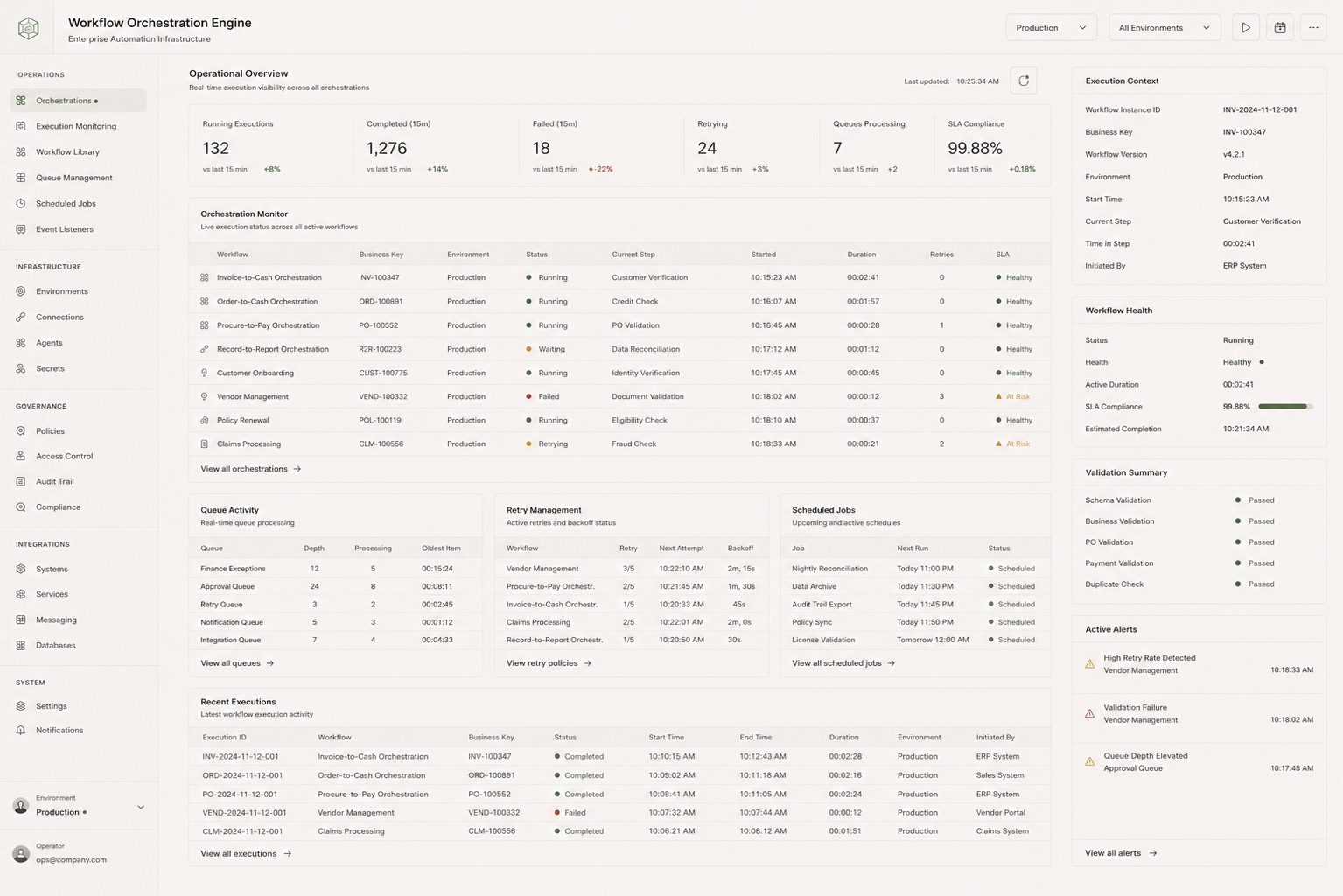
02 — Automation Monitoring
Operational monitoring dashboards providing visibility into workflow execution states, queues, retries, and system health.
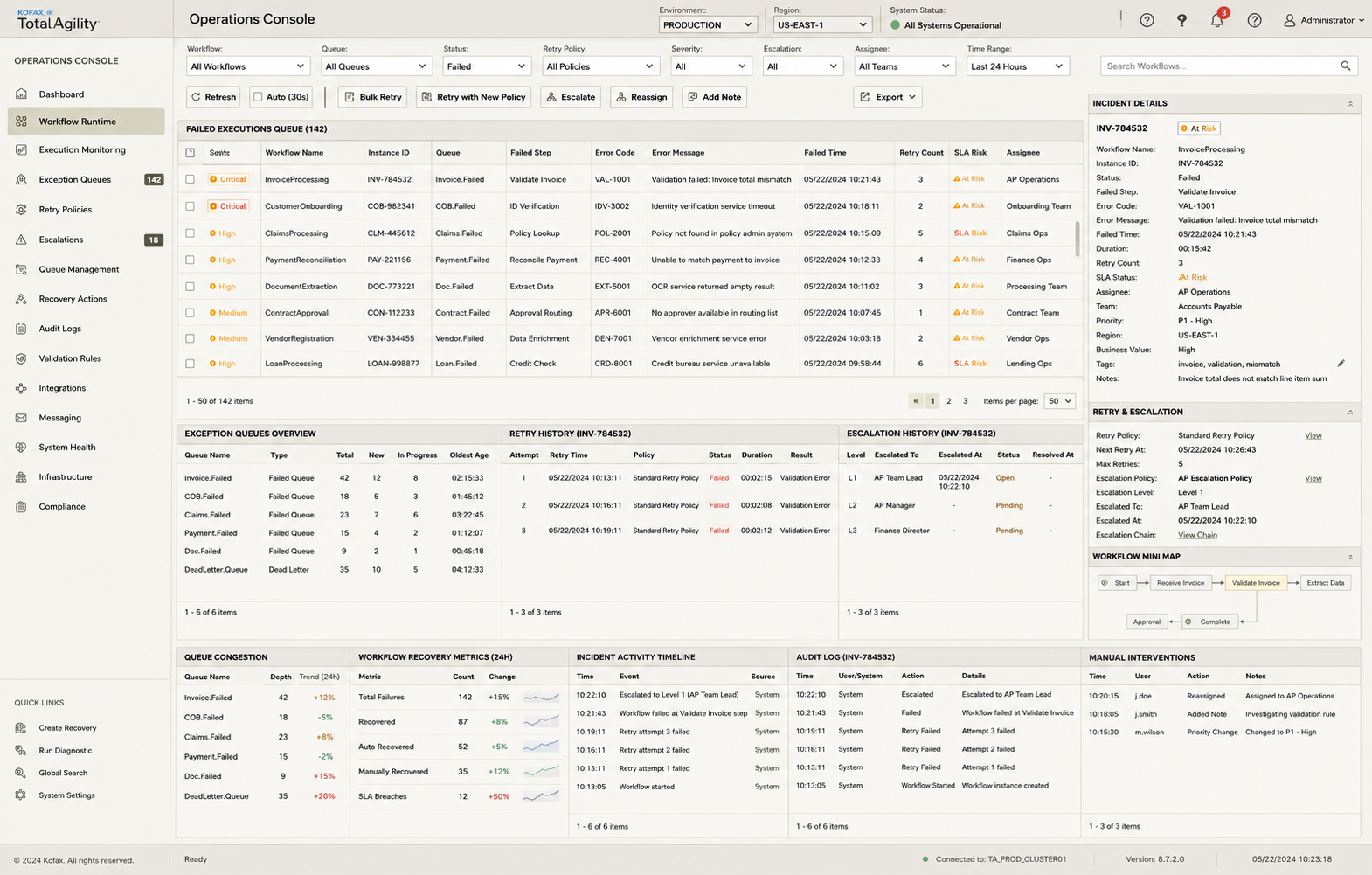
03 — Exception Management
Workflow exception systems designed to manage failures, retry logic, operational alerts, and escalation handling.
04 — Integration & System Map
Connected systems overview showing automation integrations, operational endpoints, APIs, and enterprise data flow coordination.
IMPACT & OUTCOMES
Designing operational automation infrastructures that improve execution reliability, process coordination, and scalable enterprise workflow management.
The automation infrastructure reduced repetitive manual processes while improving operational consistency, workflow visibility, execution reliability, and scalable enterprise coordination across connected systems.
Workflow Reliability
Reduced repetitive operational work through reusable automation pipelines and structured workflow orchestration.
Reliable Execution
Improved execution consistency through validation workflows, retry mechanisms, and operational safeguards.
Operational Coordination
Integrated automation systems coordinating enterprise applications, operational workflows, and business processes.
Scalable Automation
Reusable automation architecture designed to support long-term operational growth and maintainable workflow expansion.
Designed to orchestrate scalable enterprise workflows through connected automation infrastructure and operational execution systems.
This project reflects a systems-oriented approach to enterprise automation focused on operational reliability, maintainable workflow infrastructure, and scalable process coordination